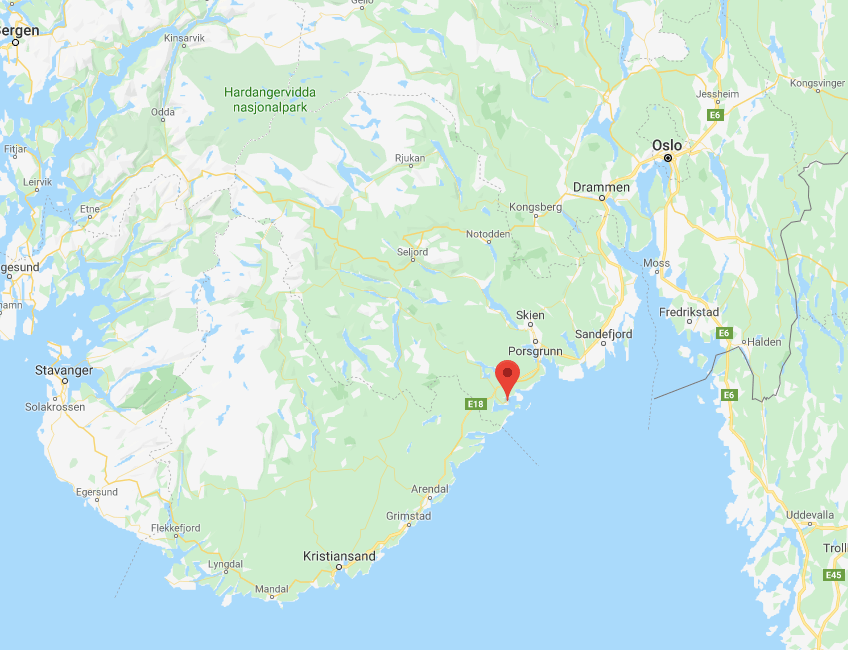
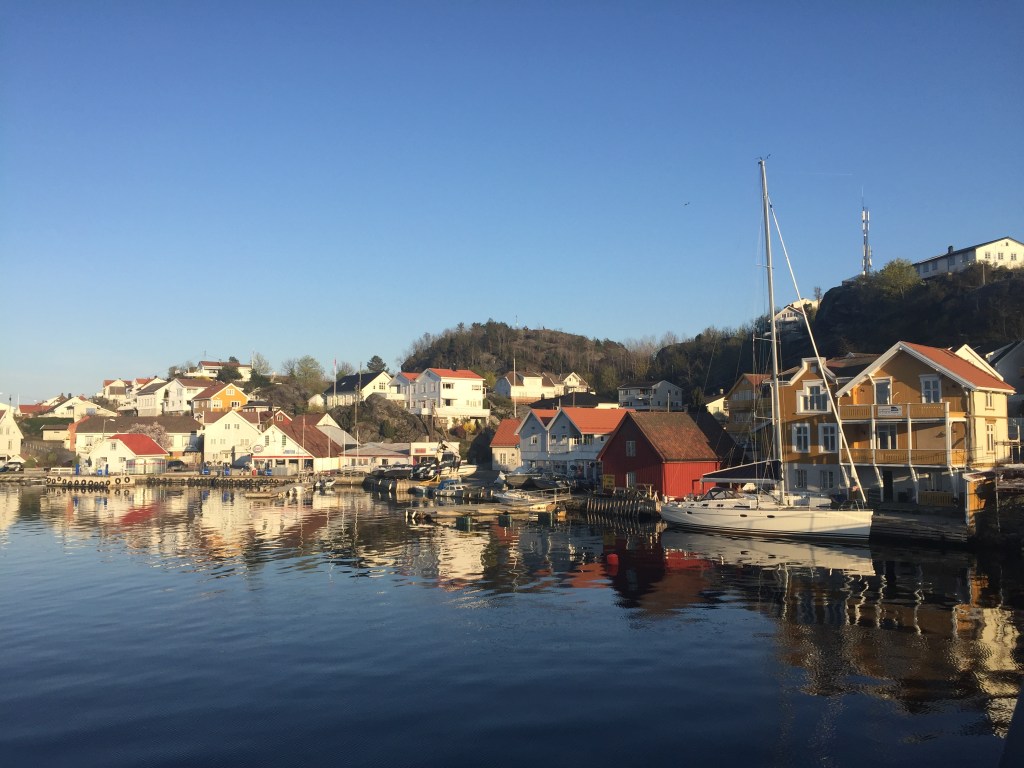
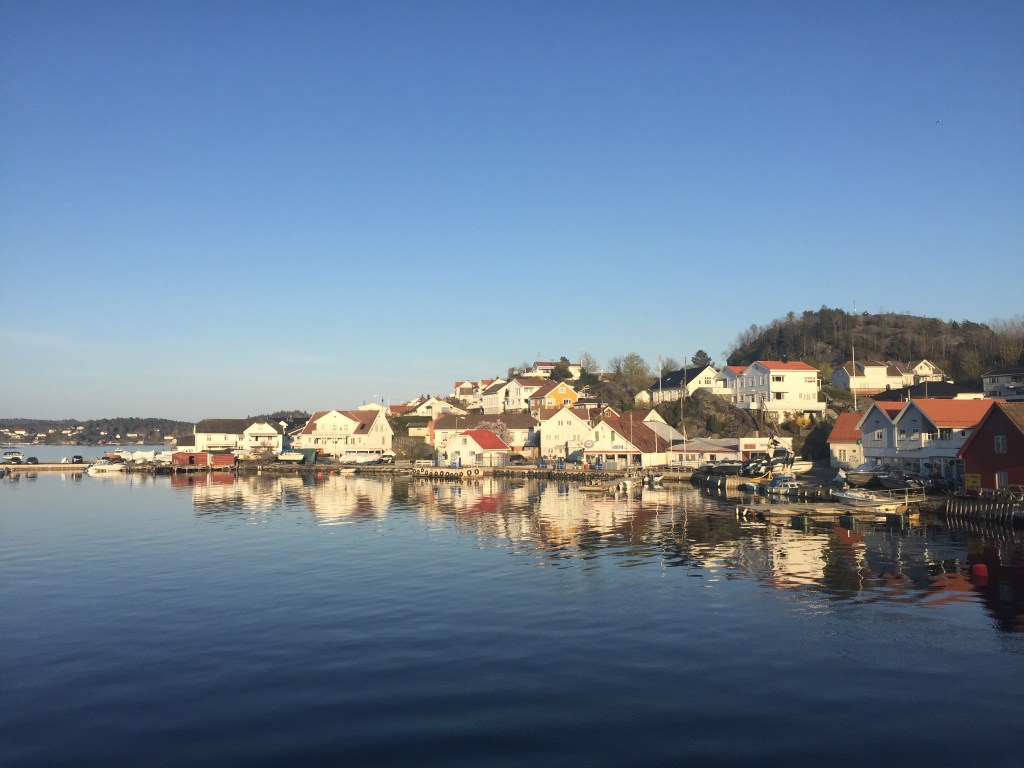
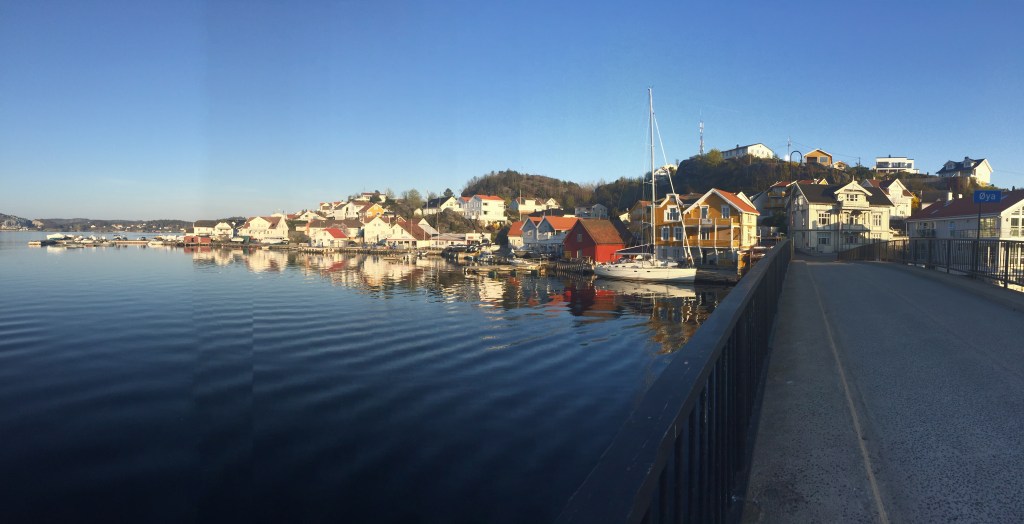
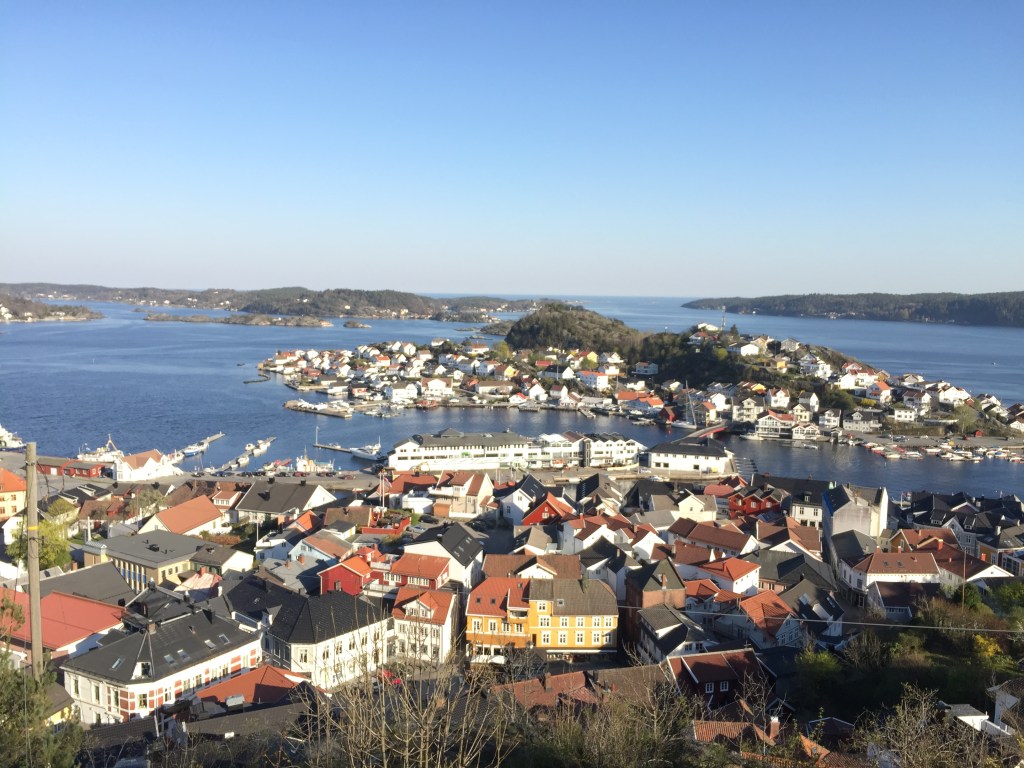
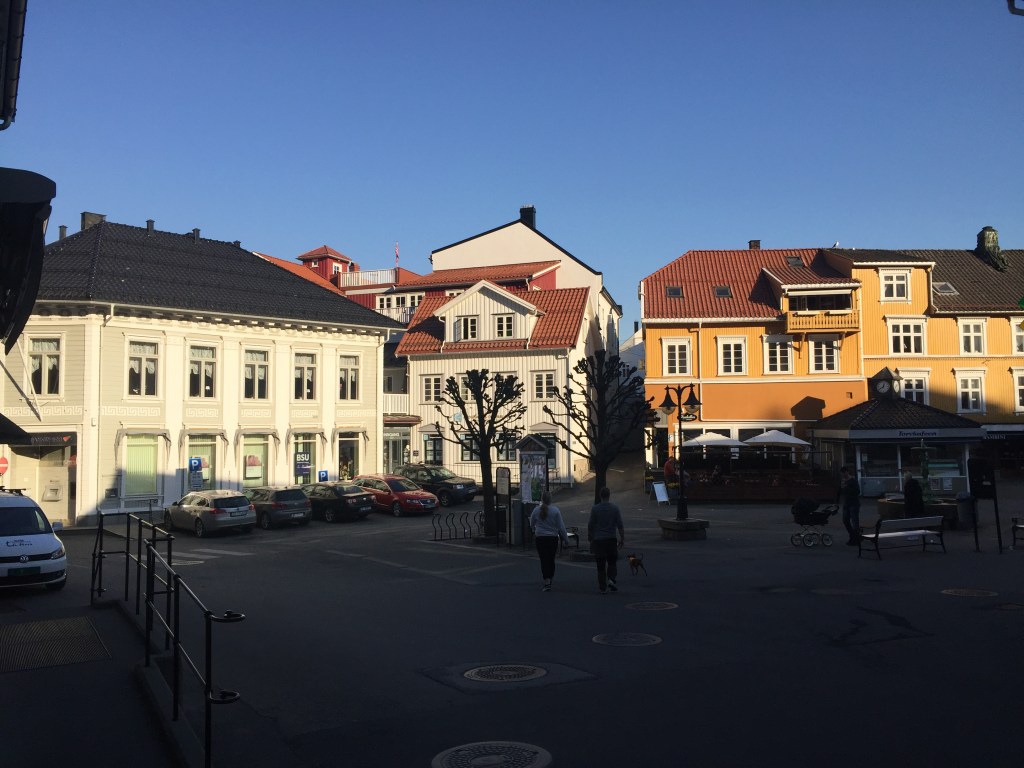
Kragerø is a coastal Norwegian town, popular as a vacation and holiday town for Oslo residents. While it experienced urban renewal like many American cities, by being a less affluent town, more traditional buildings remain today due to lack of funds in the 1970s and 80s for new structures. Of the buildings that were affected by renewal, they were replaced with more modern architectures that reflected the contemporary and richer Norwegian economy, but are considered eyesores today.
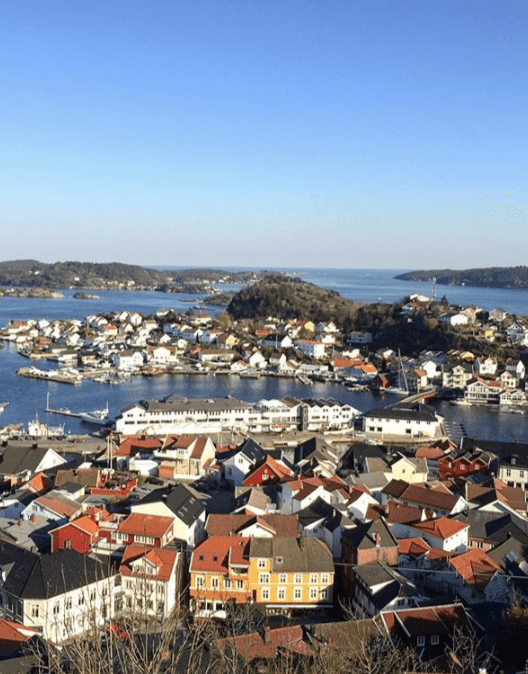
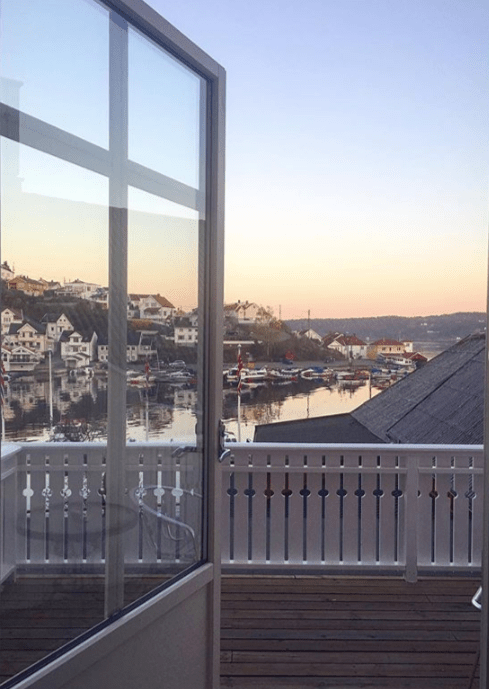
Hotell
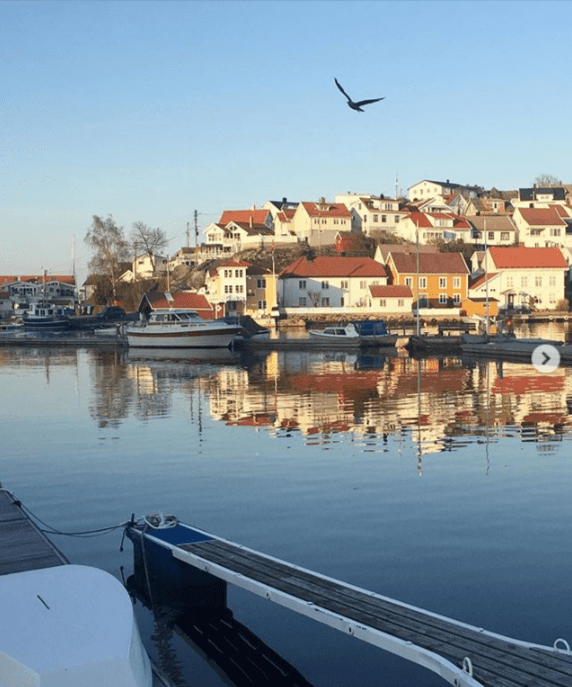
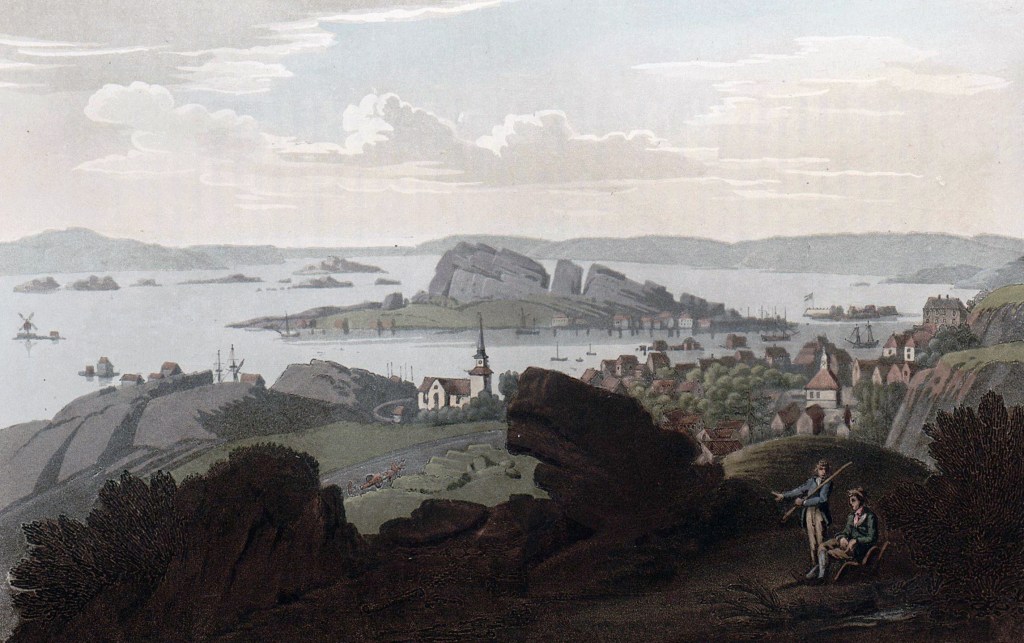
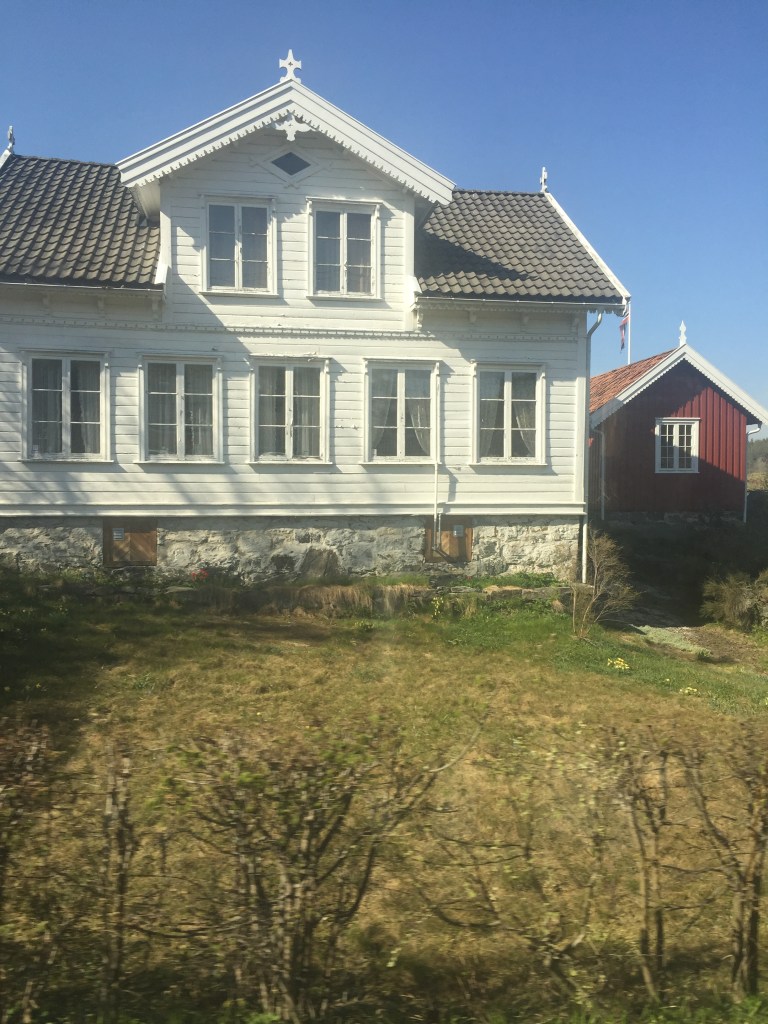
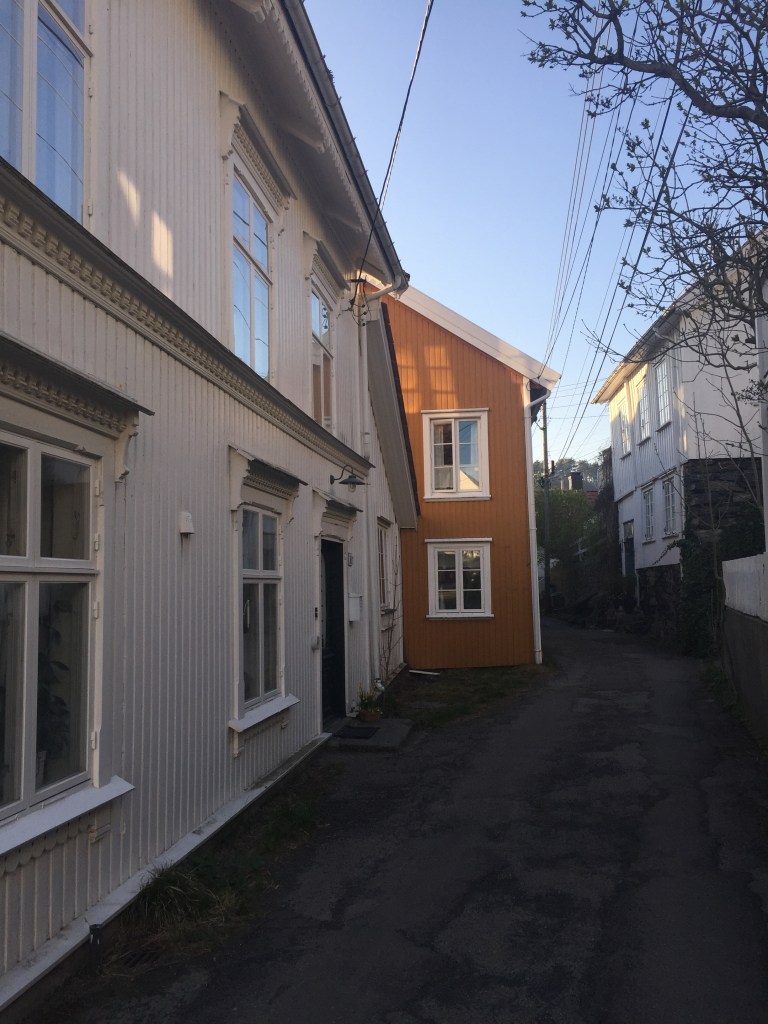
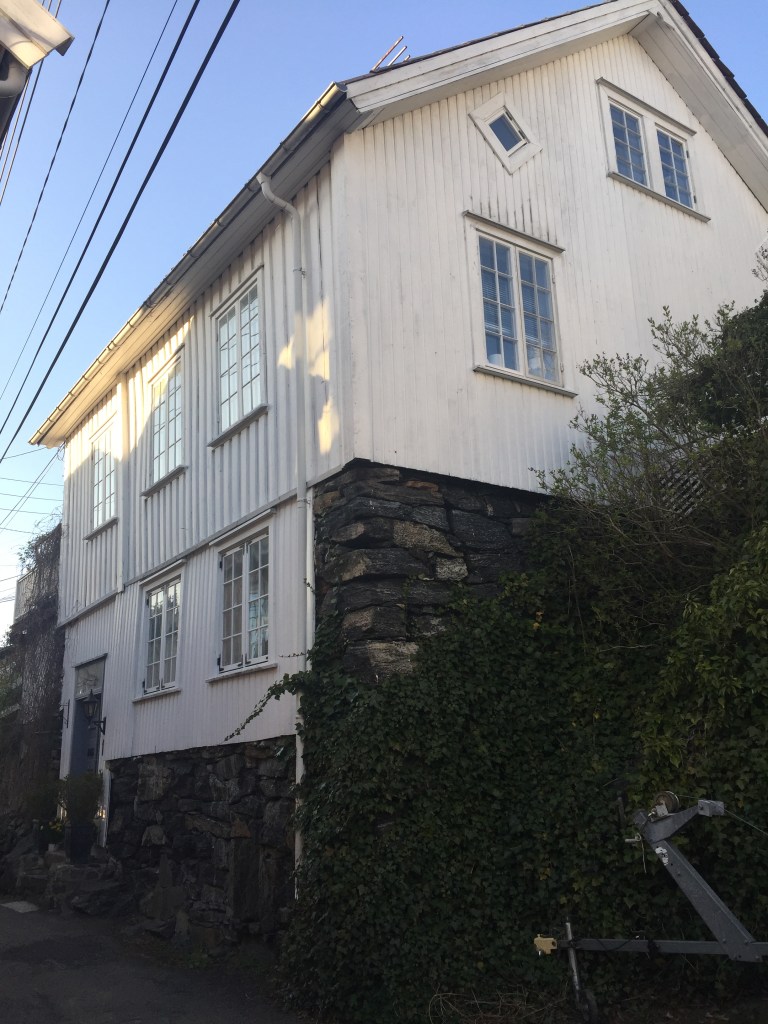
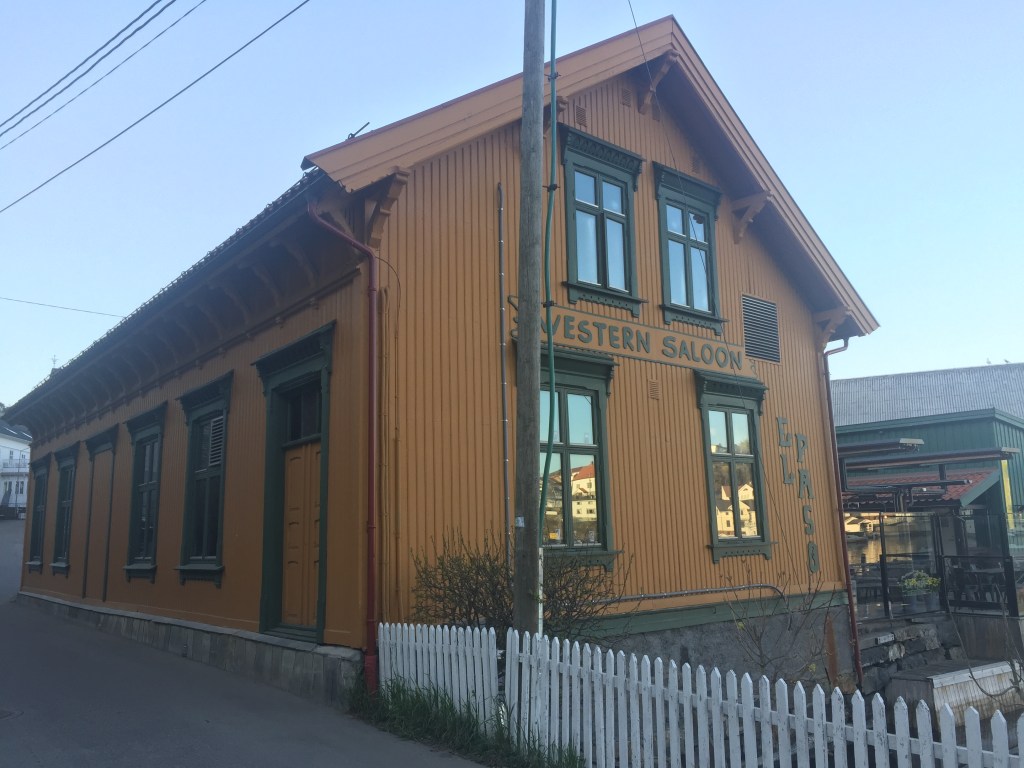
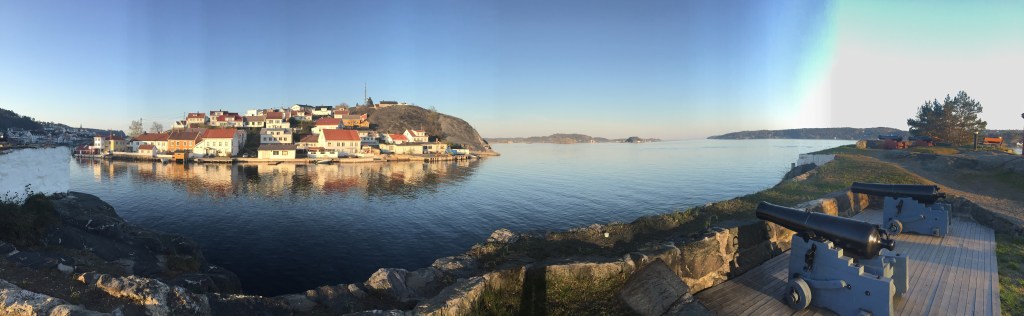
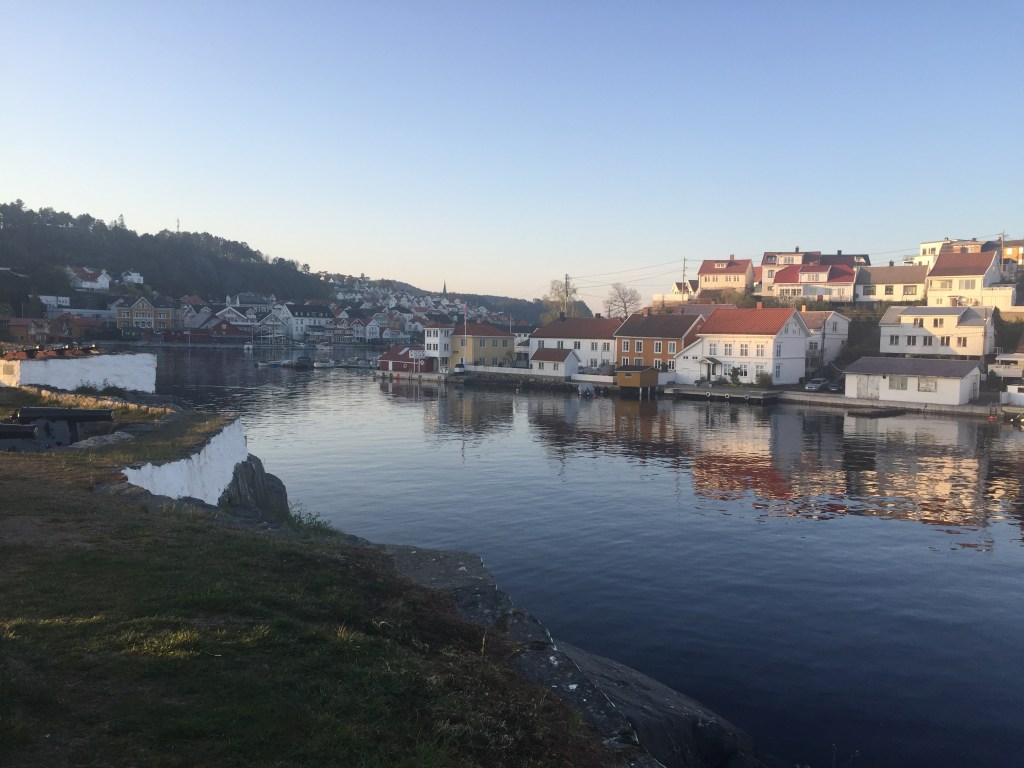
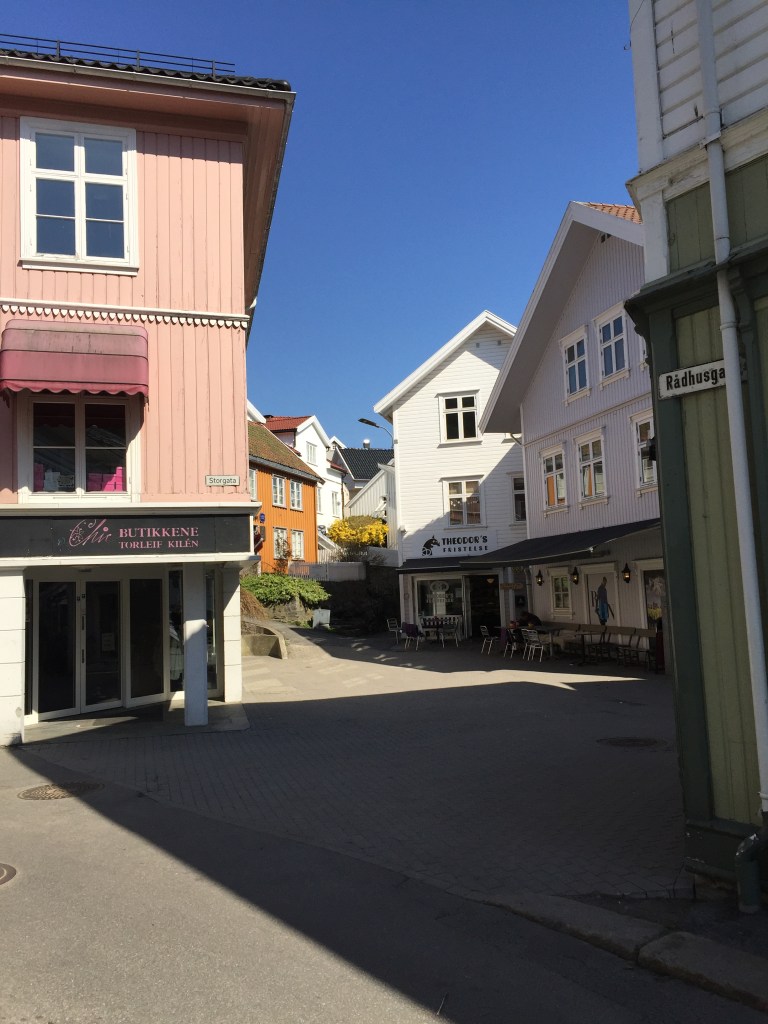
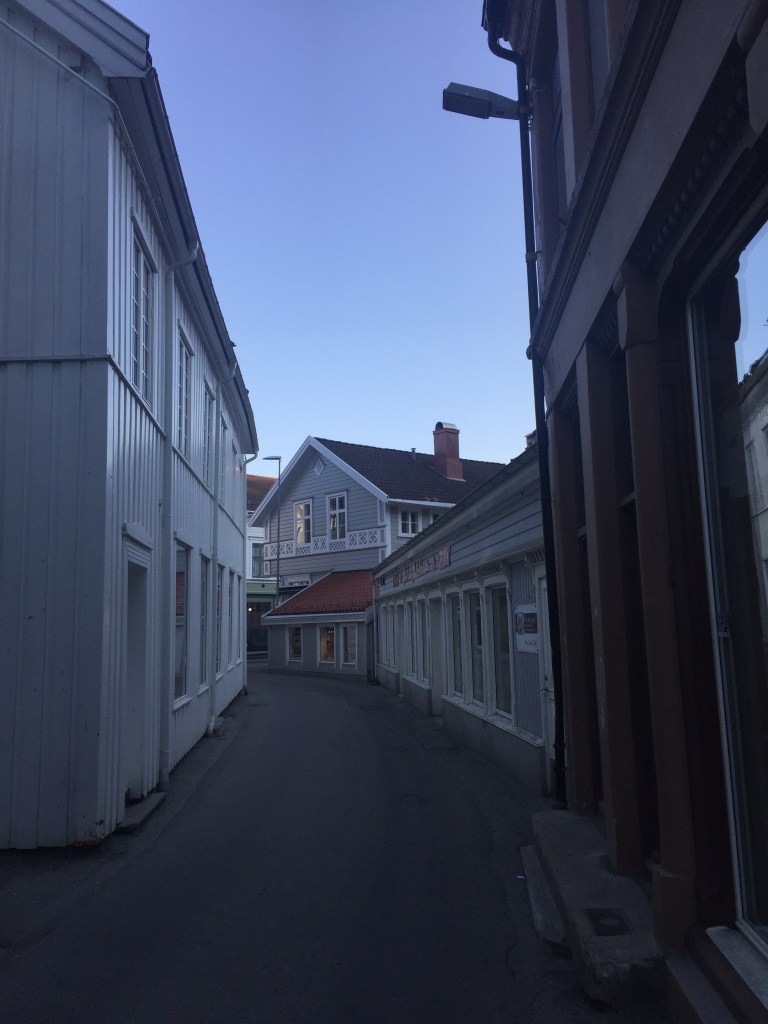
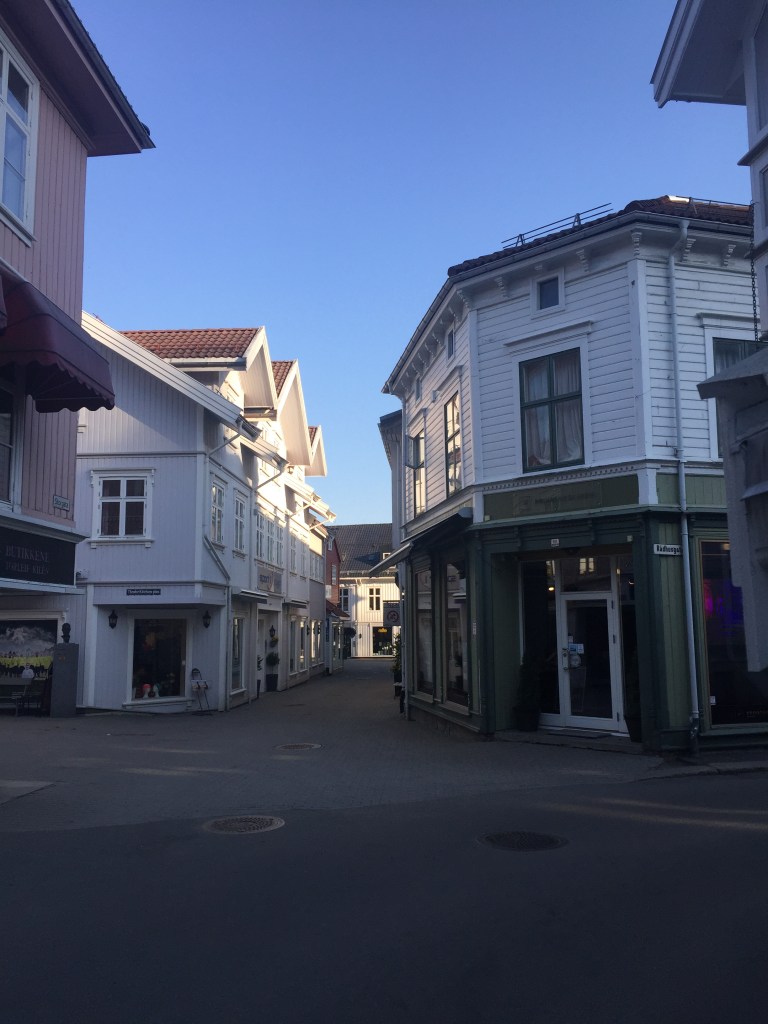
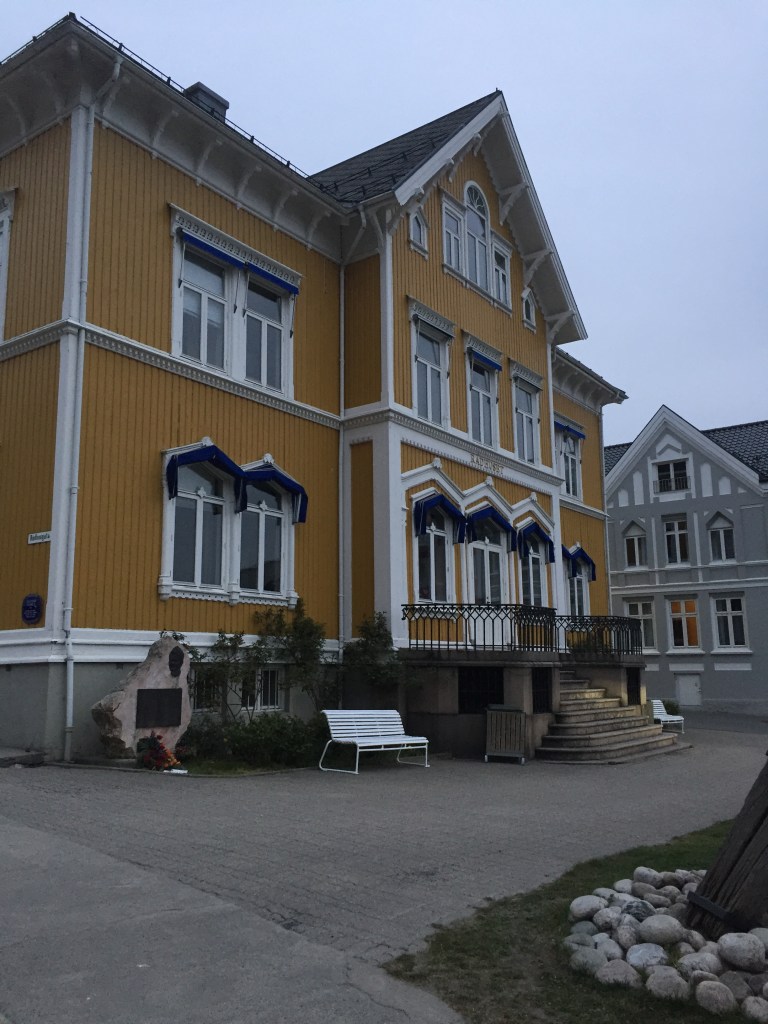
Kragerø was granted “city” status in 1666 by the Danish-Norwegian king in order to gain additional funds from collecting taxes on timber exports. The great London fire coincidentally occurred later that year and much of the lumber used to rebuild the city came through Kragerø as a result. This was significant for the city’s growth and it continued to be a major export town as ice became an international product through the 18th and 19th centuries. As a need for ice declined, the city depended more on its local economy and a few factories that operated until the late 20th century. The buildings in the city reflect the changing economy of the town. A row of 1690s estate houses line the road connecting east and west portions of the town. In the eastern portion of the town, Skippergata encompasses many of the houses used by the captains and members of the fort Gunnarholmen, which was in operation from the 18th to 19th centuries. Many of the vernacular houses in the surrounding area are from a similar time period.
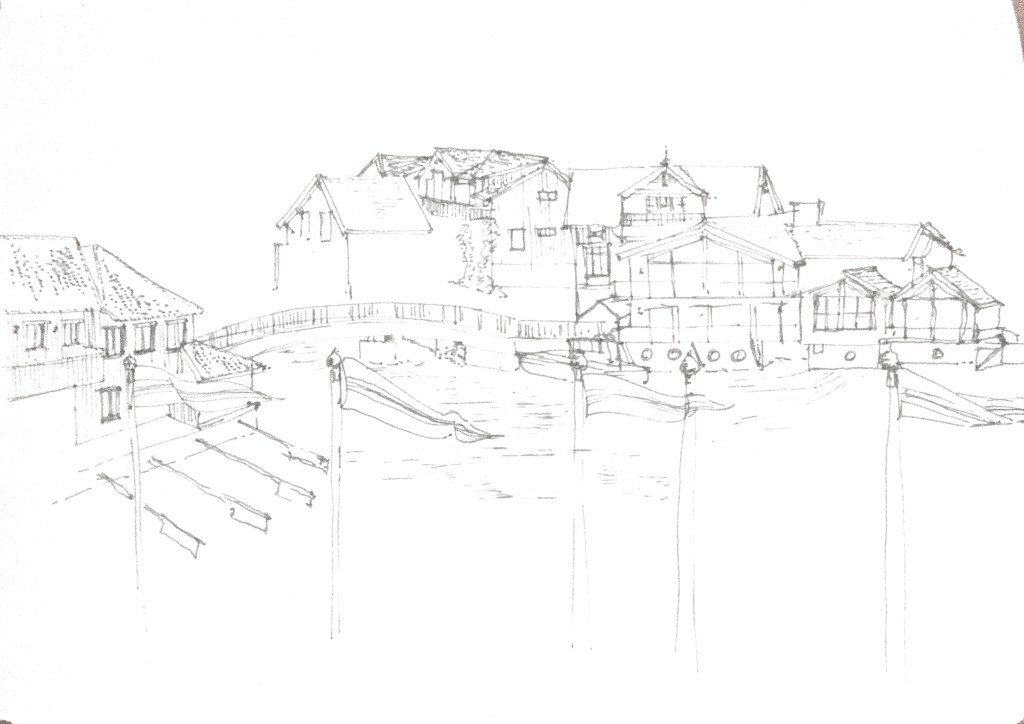
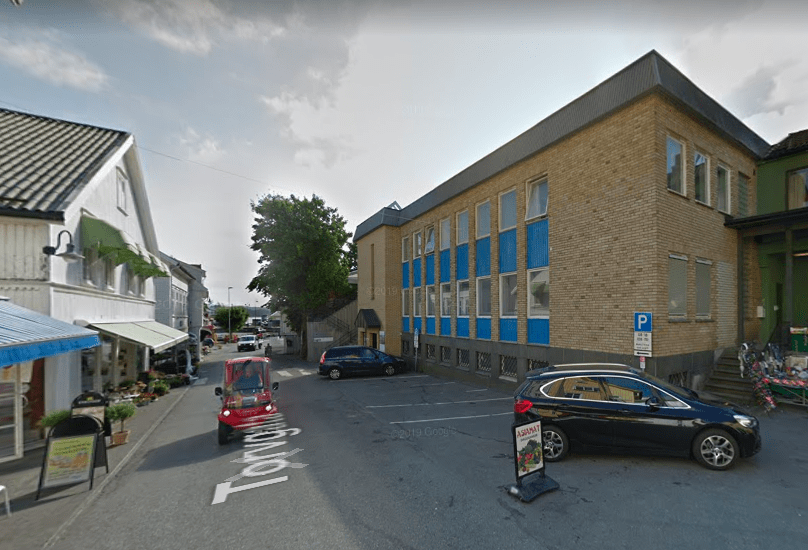
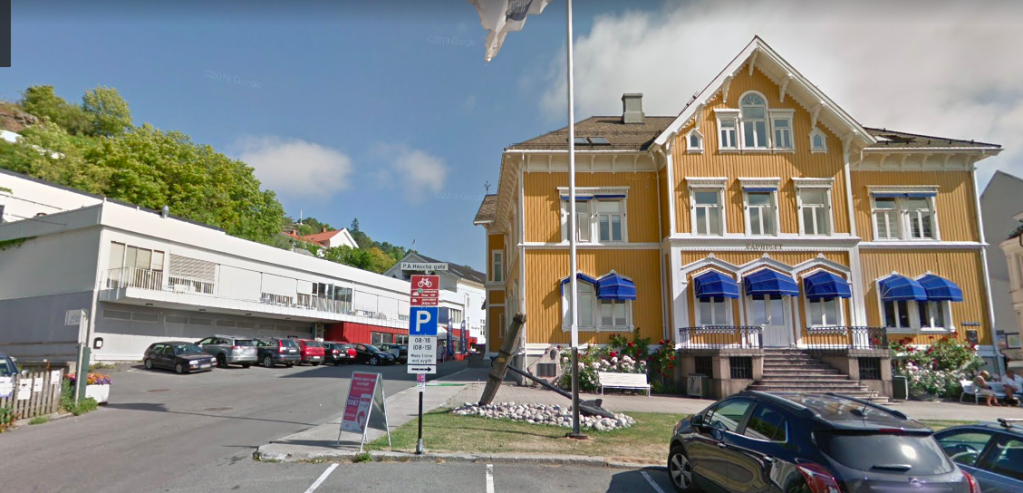
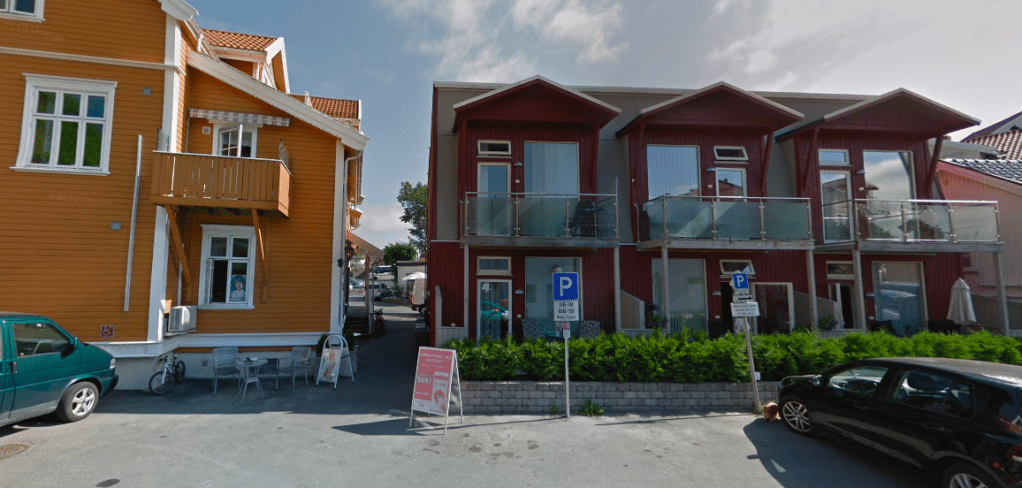
I arrived in Kragerø the day after Easter and while Oslo had been a ghost town on the holiday, apparently most of the city had traveled to their holiday homes, including Kragerø and celebrated through the day and night. Kragerø the day after, however, was extremely quiet and mostly closed as everyone had gone back home to Oslo. In addition, a few days before my arrival my meeting was cancelled so I was there without any contacts in the city.
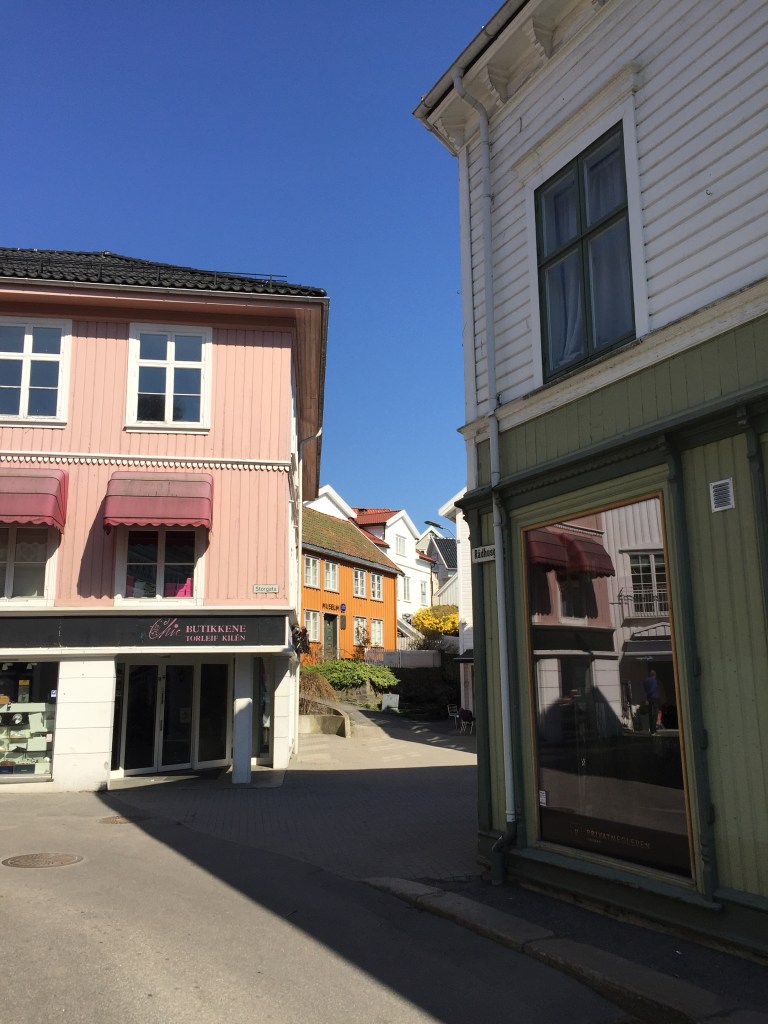
Fortunately, after a visit to the local library for historic resources in English (non-existent), the wonderful librarian Elin volunteered to give me a personal tour of the town and was happy to discuss the questions I was interested in.
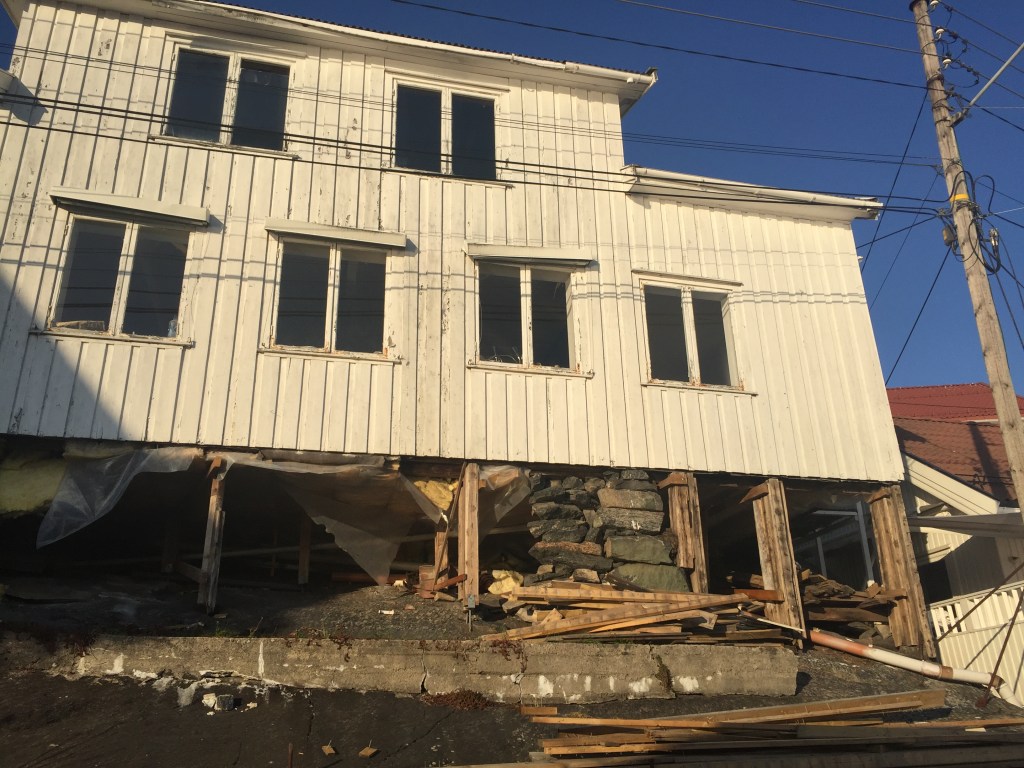
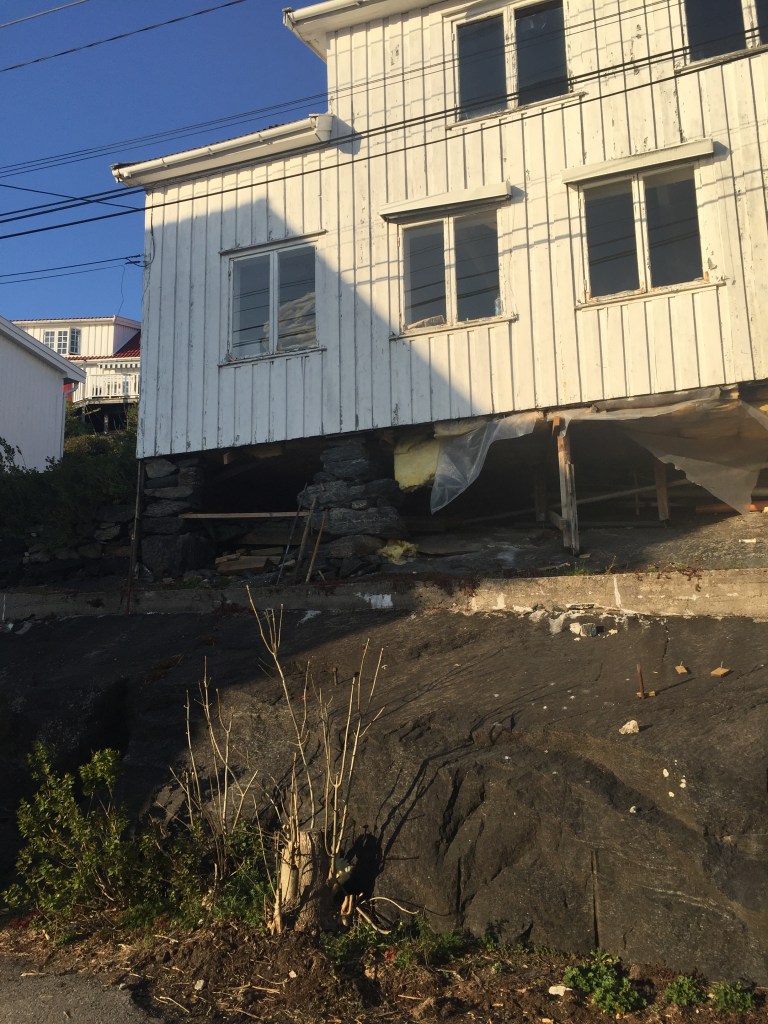
The following day I reached out to the owner of my accomodation who had a friend in the Kragerø Kommune, Inger Nina Isaksen, who is the Kulturkonsulent and International adviser for the town. Inger Nina suggested we meet the following afternoon. When I arrived, we met Mick Travis from the Tallakshavn Coastal Culture Center project and went on a tour of the Riggerbua building in the southern end of Kragero. The historic boat house is being adaptively reused to provide a center to host meetings, build boats, and educate the community, and is in the midst of reconstructing the foundations in order to level and support the building.
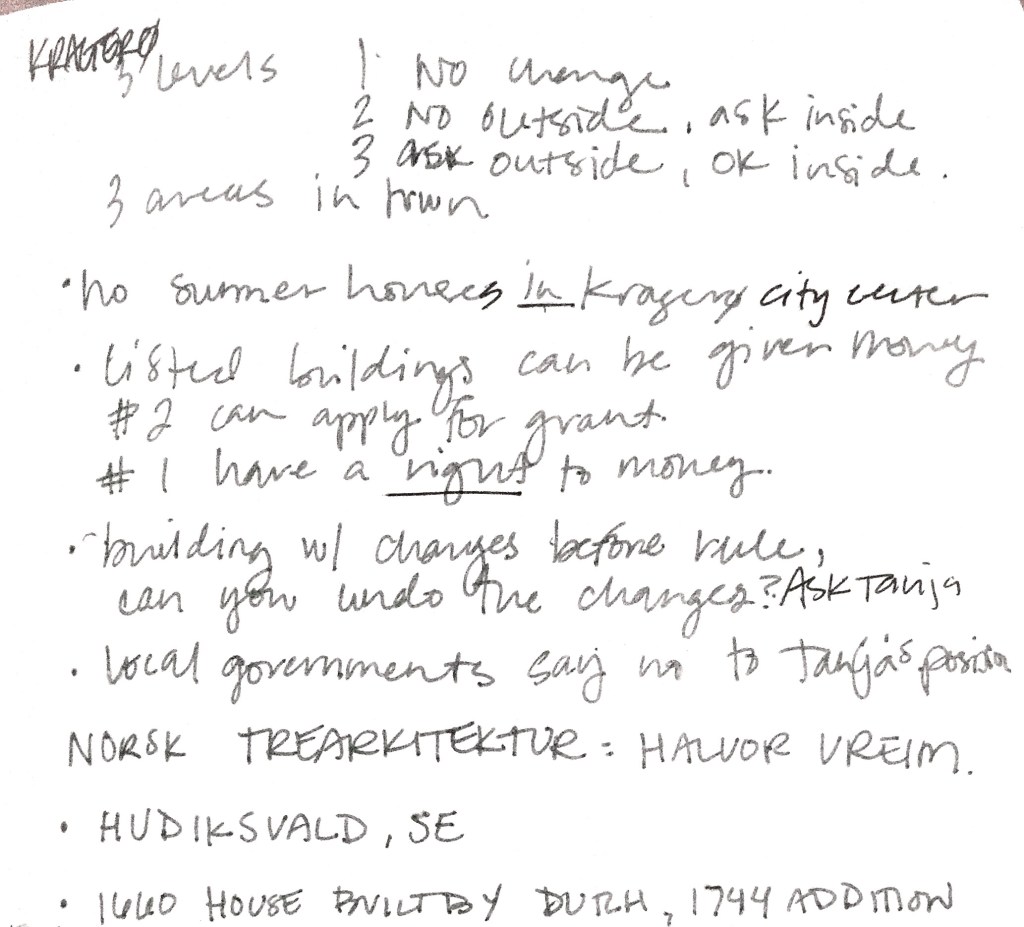
On the way to Tallakshavn, Mick described the challenges with his own house a few blocks from our destination and the listing system the Norwegian government uses for cultural heritage resources. He described a two-level grading system for heritage buildings and resources. Verneklassene or Protection Class 1 limits all work that goes beyond routine maintenance and is recognized nationally with the highest level of protection. Protection Class 2 refers to “internal” protected sites within the fylkes and typically protects the exterior but can also protect the interior. This protection class may or may not be legally binding. Protection Class 0 is commonly used to refer to buildings and resources that are not considered eligible for protection, though the Riksantikvaren stresses that this does not mean conservation is not worthwhile or necessary as such buildings may still be of great local importance and can be protected by the individual kommunes. Mick’s house and much of Gamle Kragerø is level 2 or above.
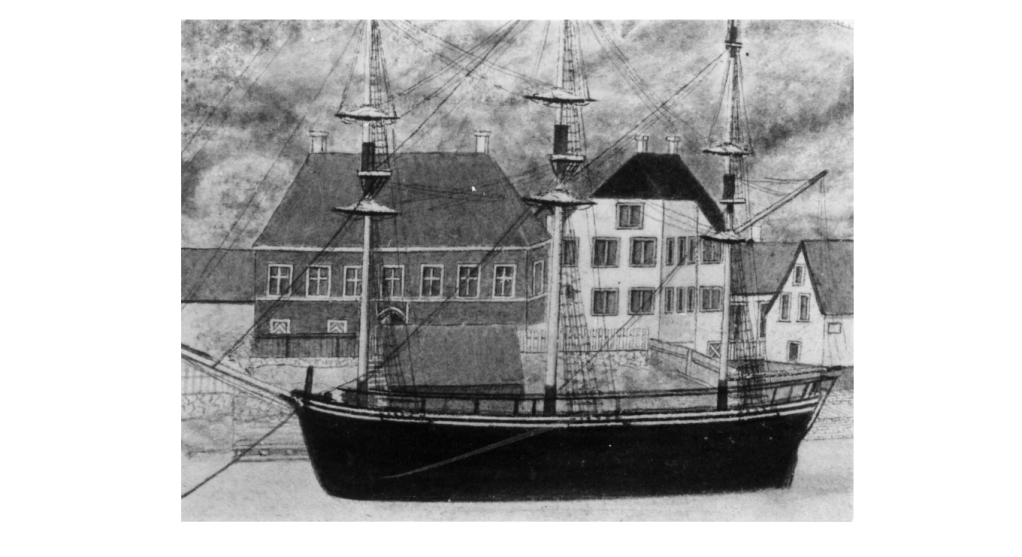
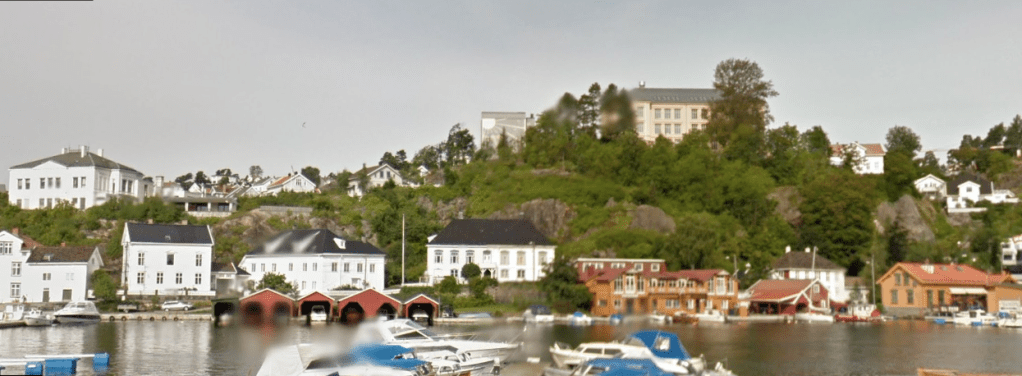
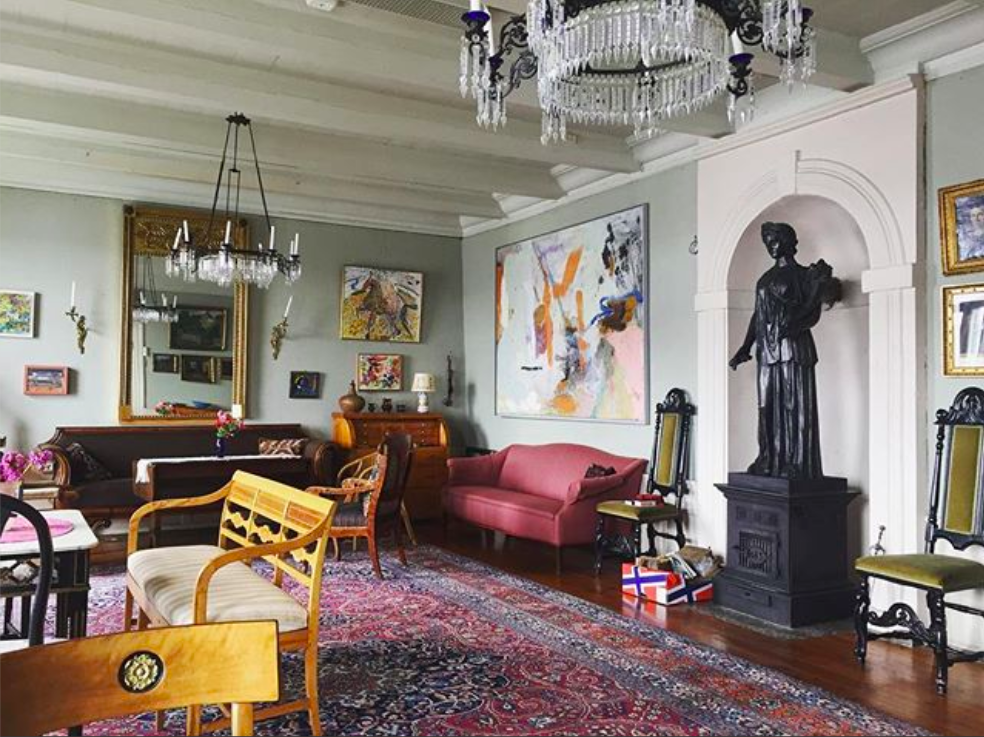
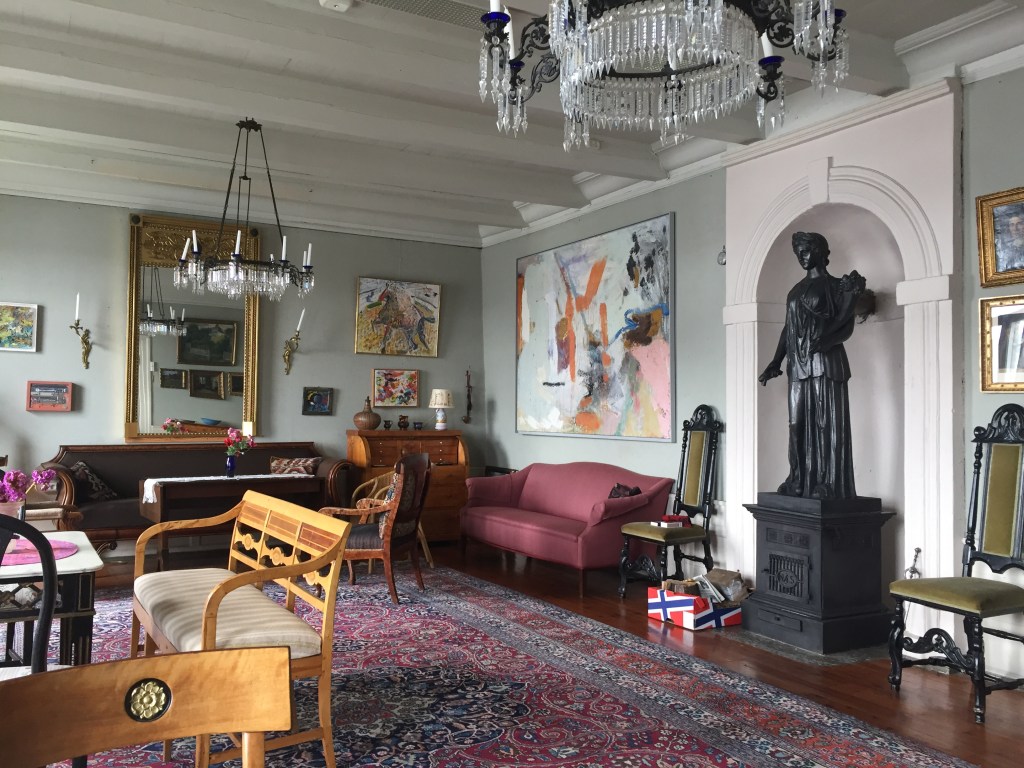
and talk to me about the history of the town. The log attic structure was unreal… if only I had a photo!
Speaking with Elin and Friends of Kragerø, we discussed a major new development in a highly visible location of the town center that is currently in the planning phase. I gathered that there was not a well-regarded process in providing public comment for the project. There were public protests against it from individuals and organizations. A revision of the plan has been asked for by the group, and they successfully pressured the city for a vote on the proposal which will occur in May 2019. It is called the “Inhabitants Initiative”.
A few months before I arrived, there was a Riksantikvaren presentation in February on the project with the outcomes of what could happen. The presentation was great, but representation since then has faltered, leaving Friends of Kragerø without support.
The project is being undertaken by a wealthy Oslo developer known for his large projects in the area. Despite the negative opinions I heard from several residents on this particular project, when asked about the developer’s influence on the city and whether or not they saw this as problematic, I was pleasantly surprised to hear that most thought he took care of the city and was a thoughtful developer. It seems that some development may be good development for a town with little growth.
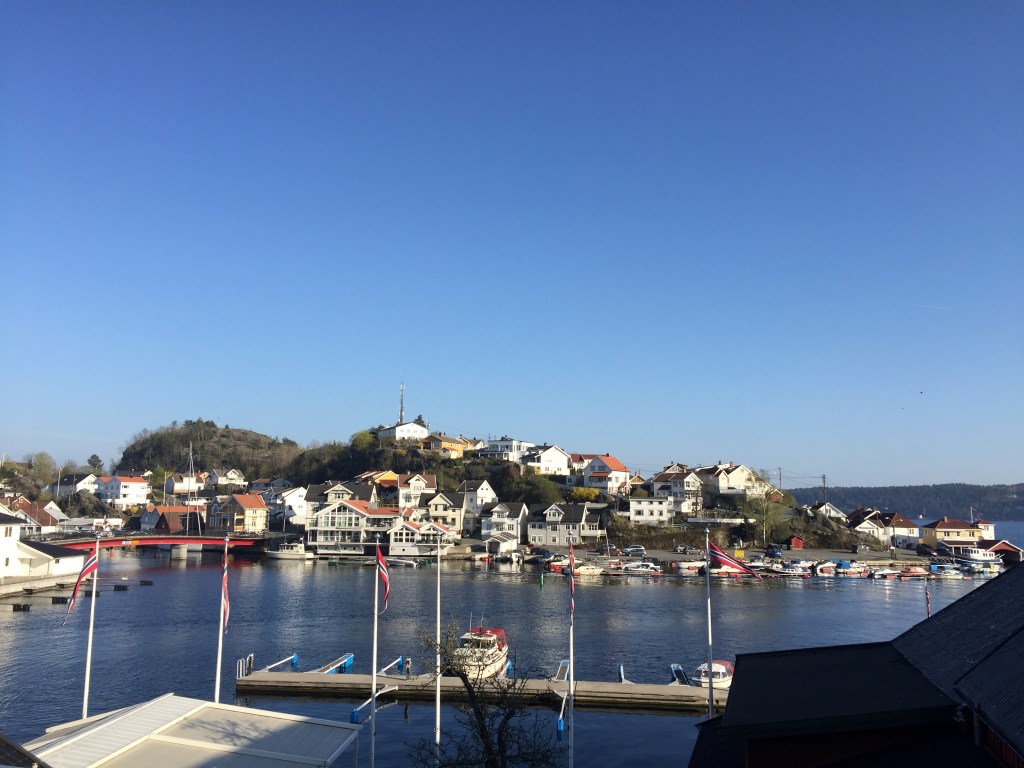
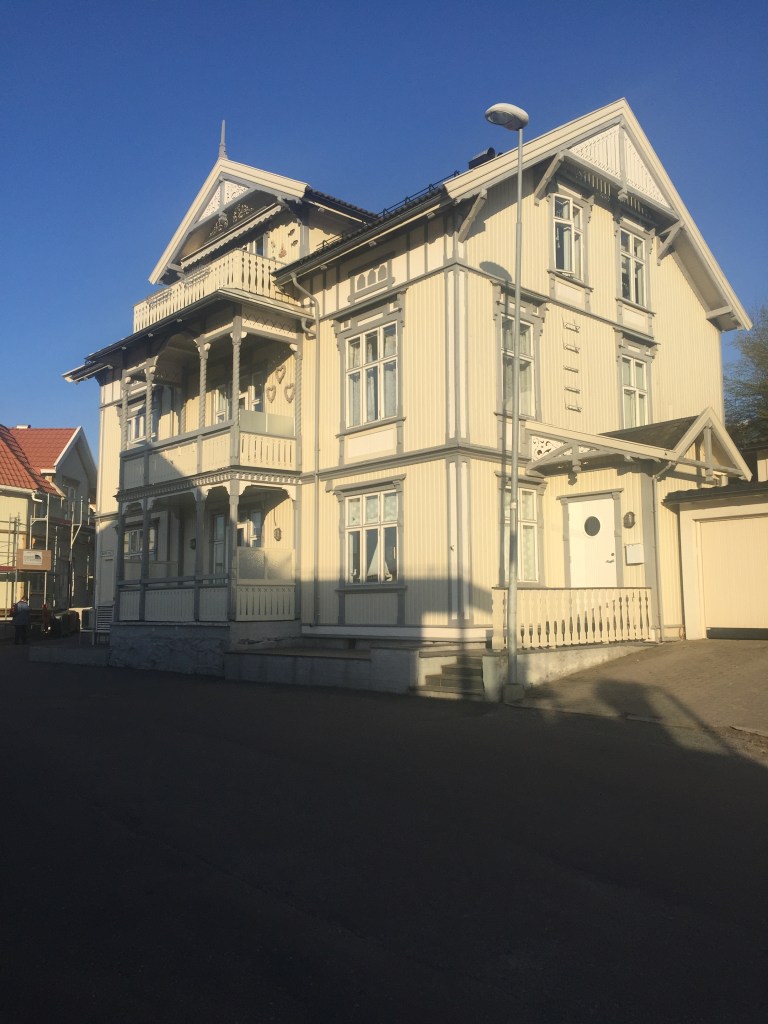
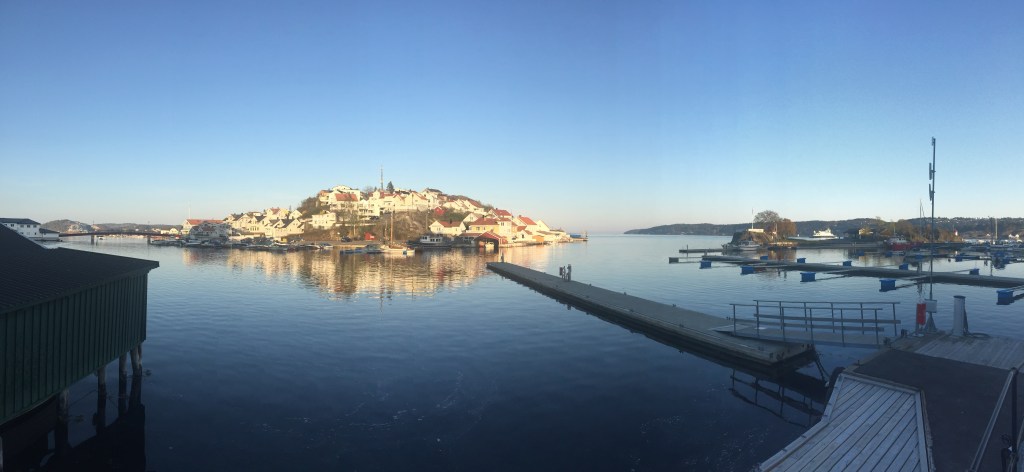
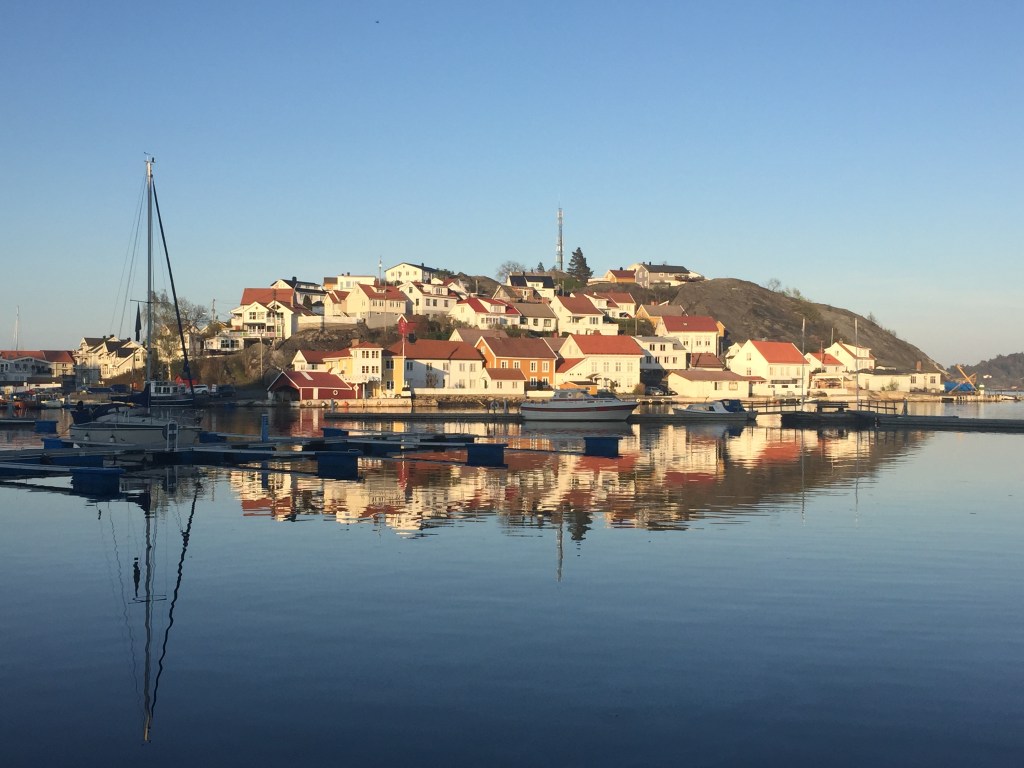
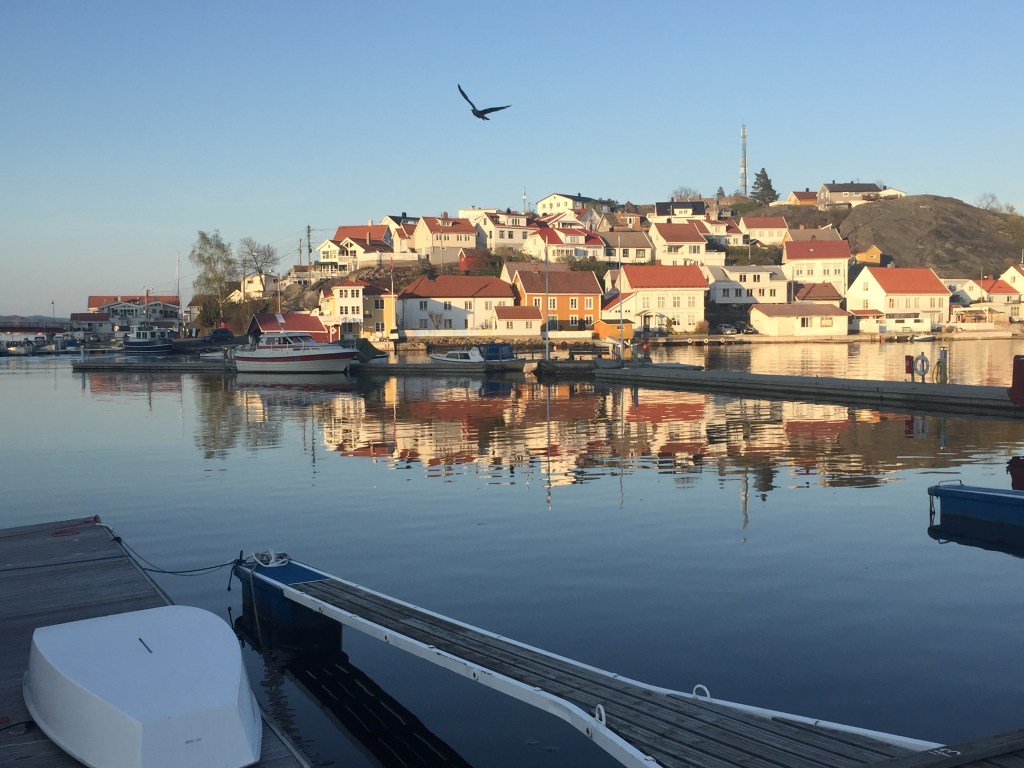
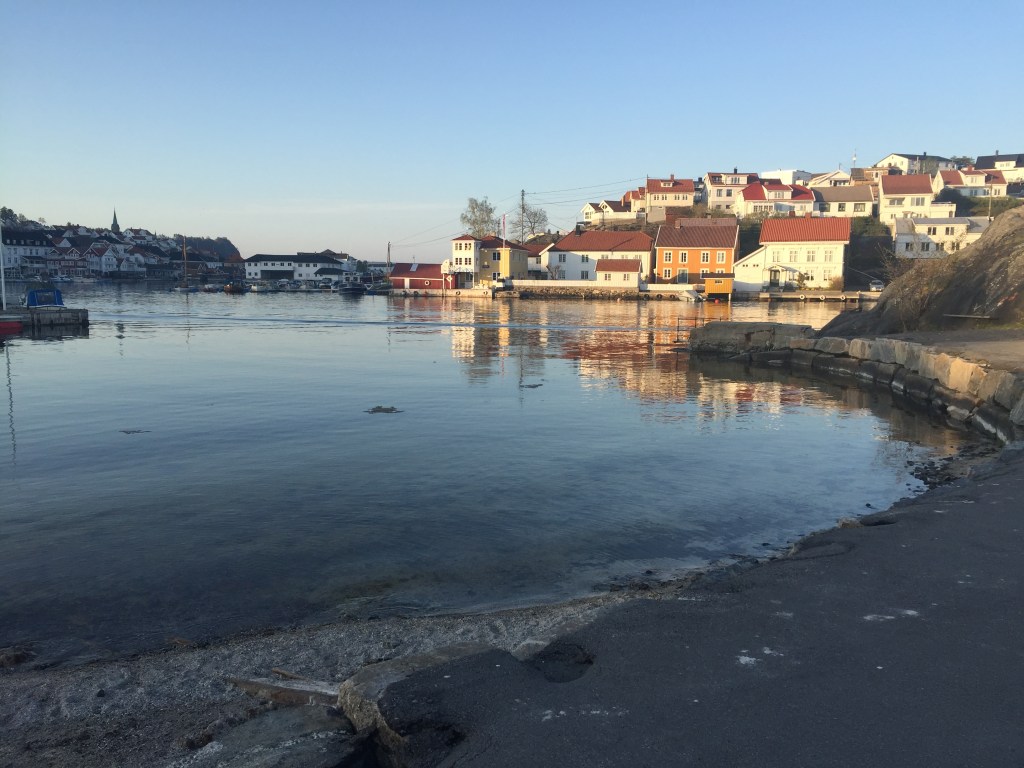
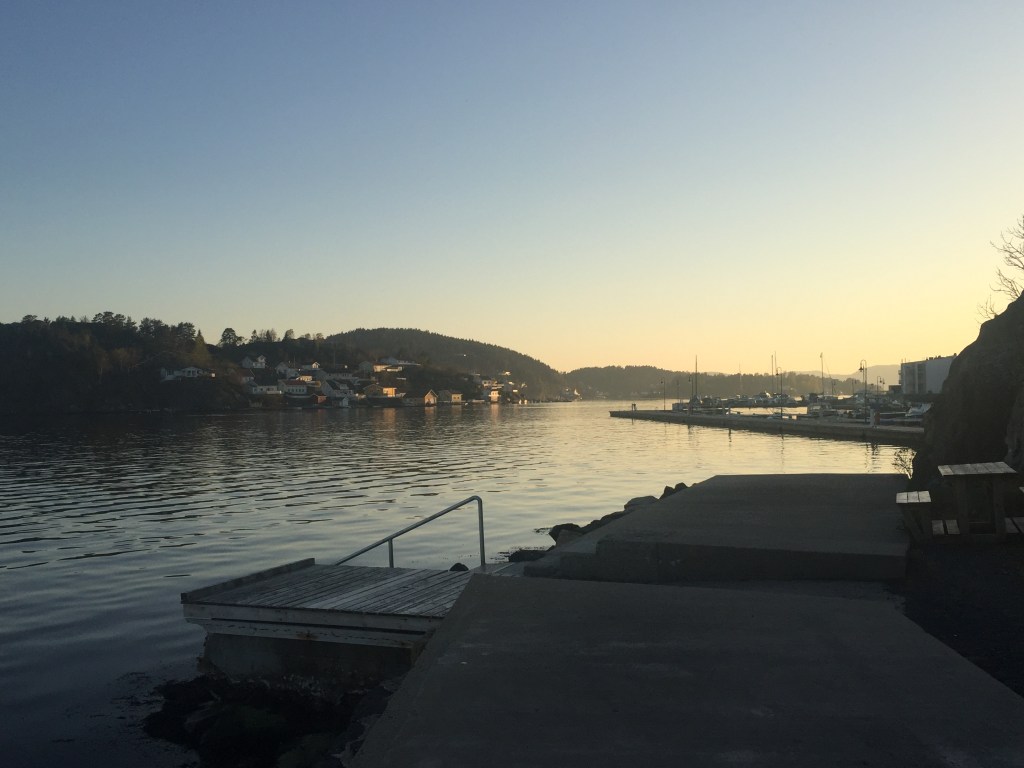
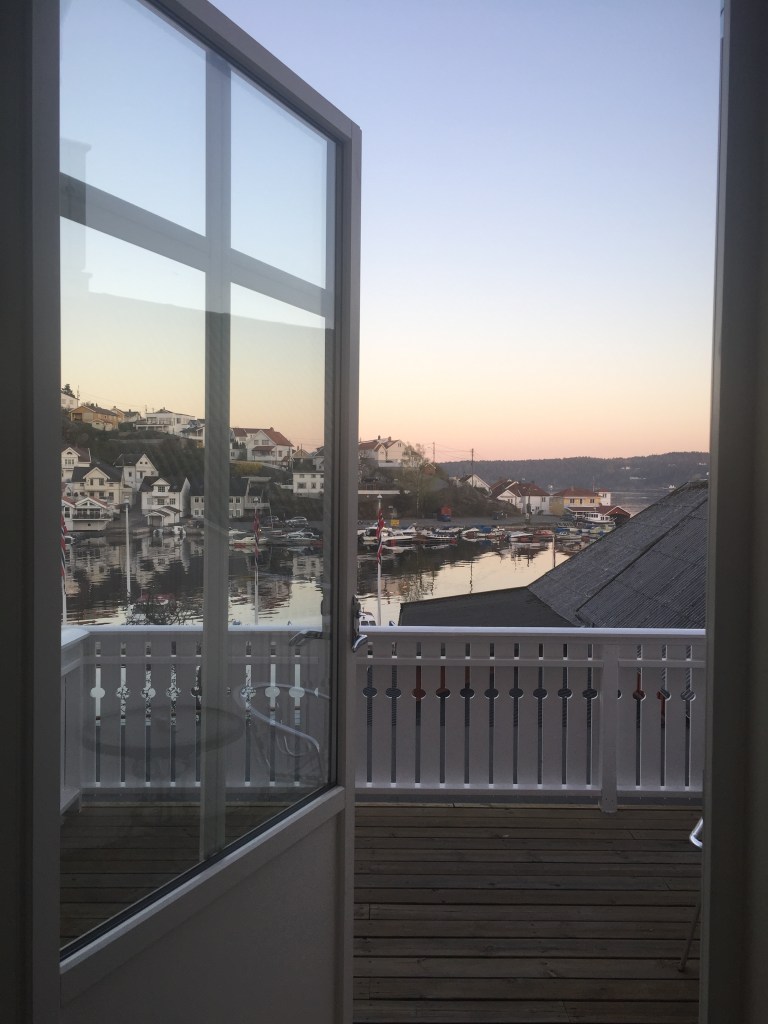
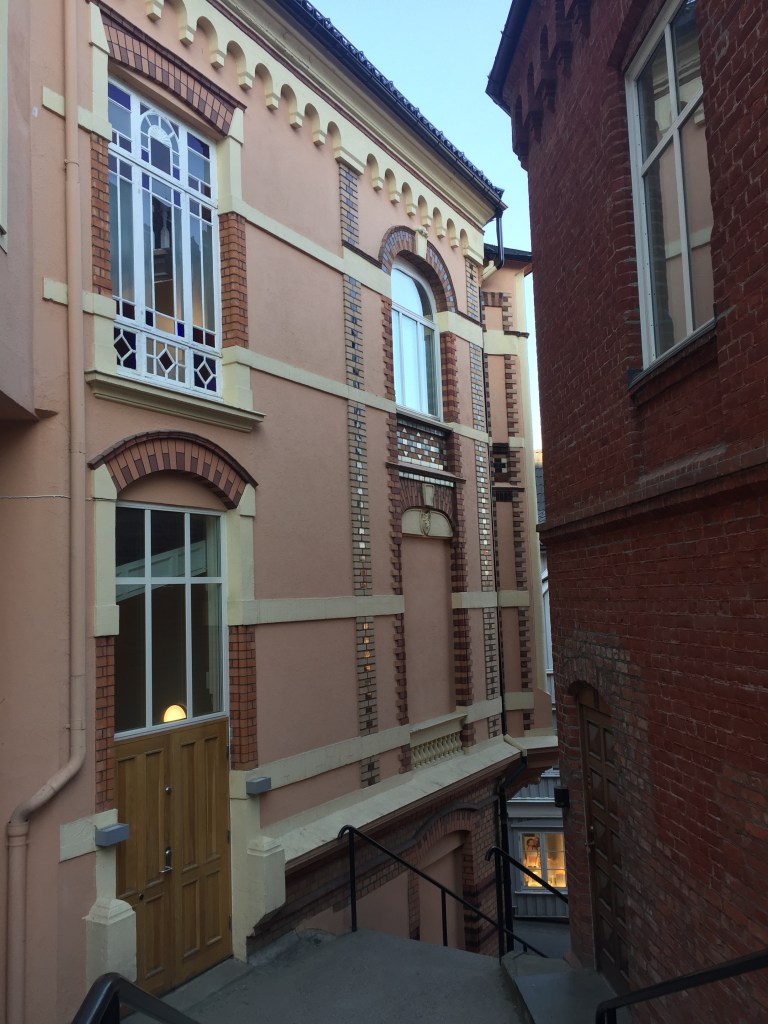
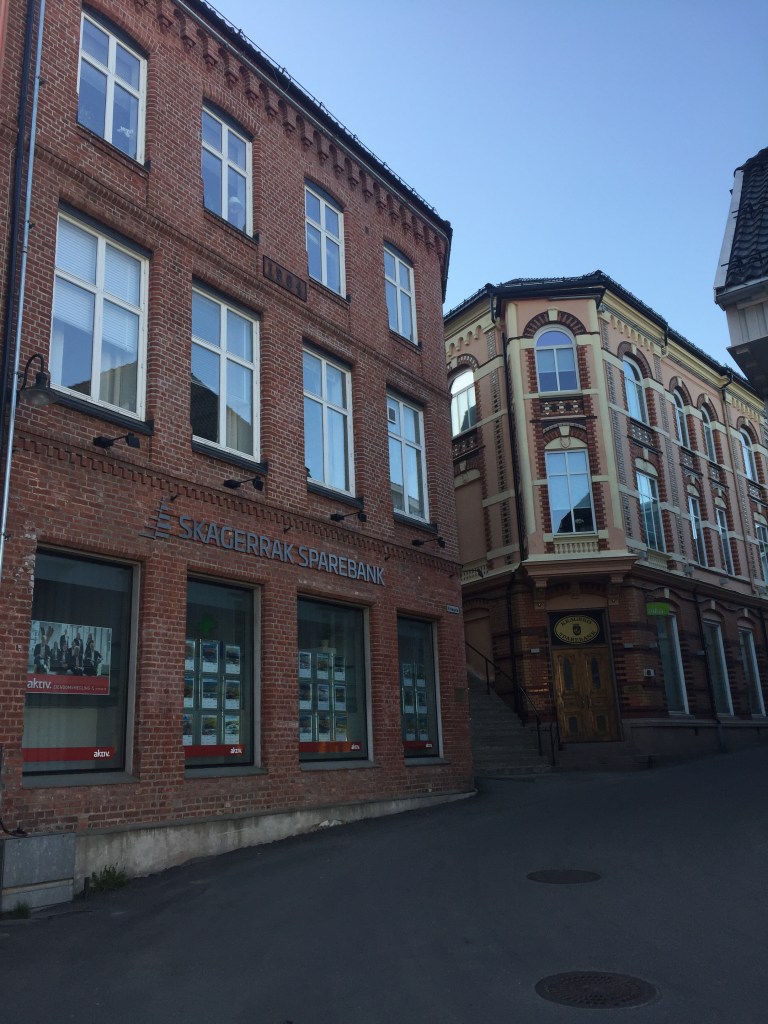
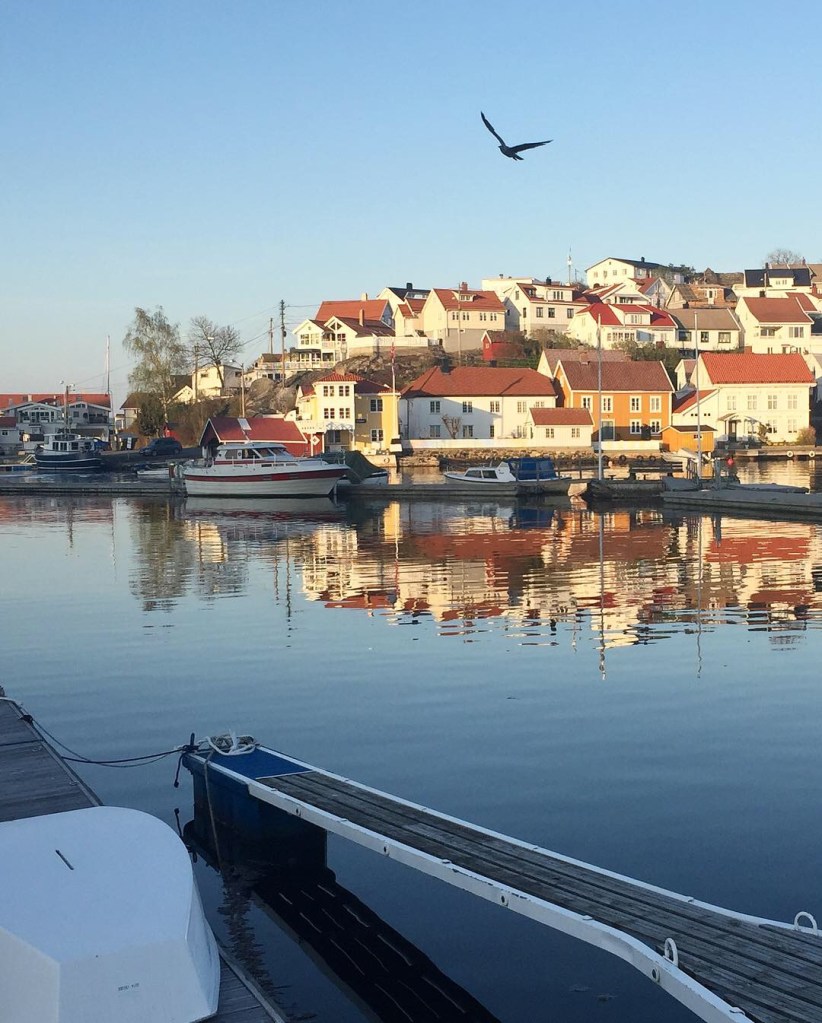
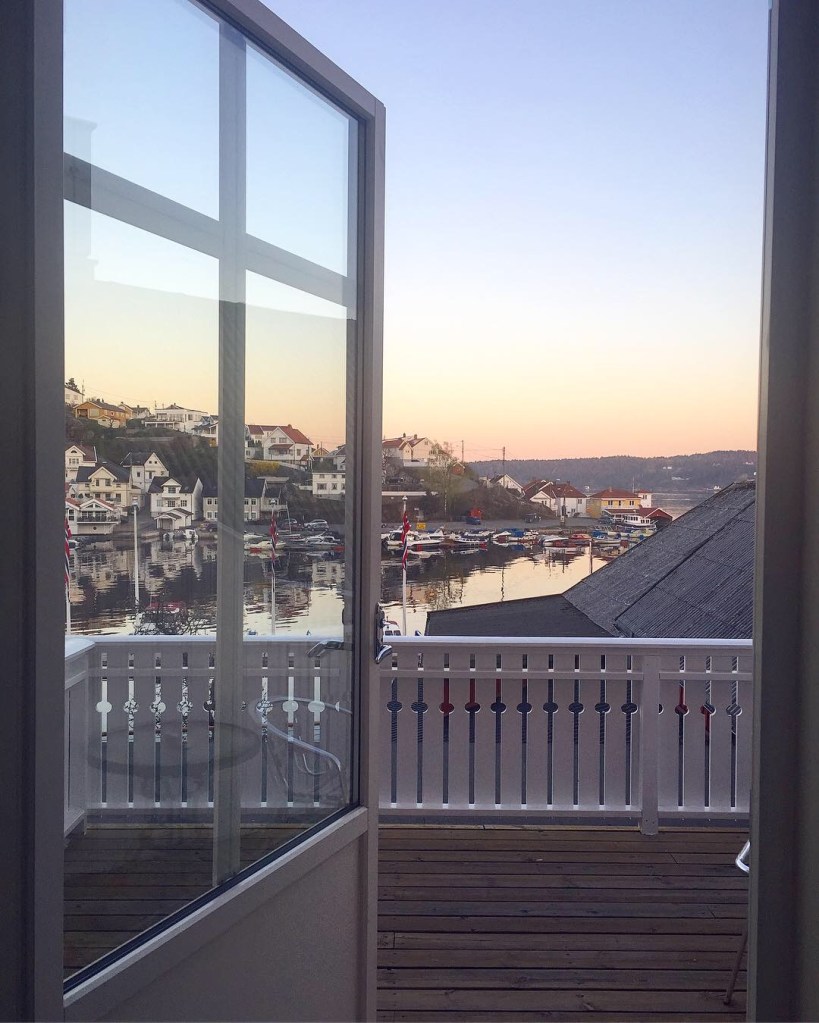
A broader issue in the city is the failing of the local tourism office. Kragerø is called the “Gem of the Coastal Towns” and for good reason, it is breathtakingly beautiful, with island outcrops and traditional, 17th-, 18th-, 19th-, and 20th-century houses throughout the town. Its collection of intact traditional Sveitserstil (Swiss-style) architecture is uncommon and has been recognized nationally for its architecture and heritage. It is a popular vacation town for Oslo-dwellers and many houses are let or owned as summer cottages. It is also widely known as the home of Edvard Munch for several years and the location of many of his notable paintings. Despite its beauty and popularity, the city tourist office closed several years ago due to lack of funds. The town itself struggles as well; the local shoe factory and manufacturing plants have been closed for quite a few years and there is little in the way of job prospects to maintain residents and attract young adults and families. The major employers in the town are the schools, elder care, city government, and local shopping/tourism. They have created a paradox: due to the lack of funding for tourism services and marketing, the town sees less foreign tourists and has little money to invest in its biggest moneymaker: the historic town buildings.
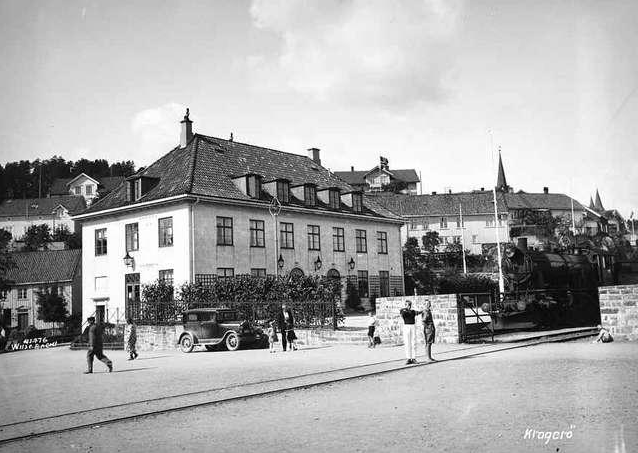
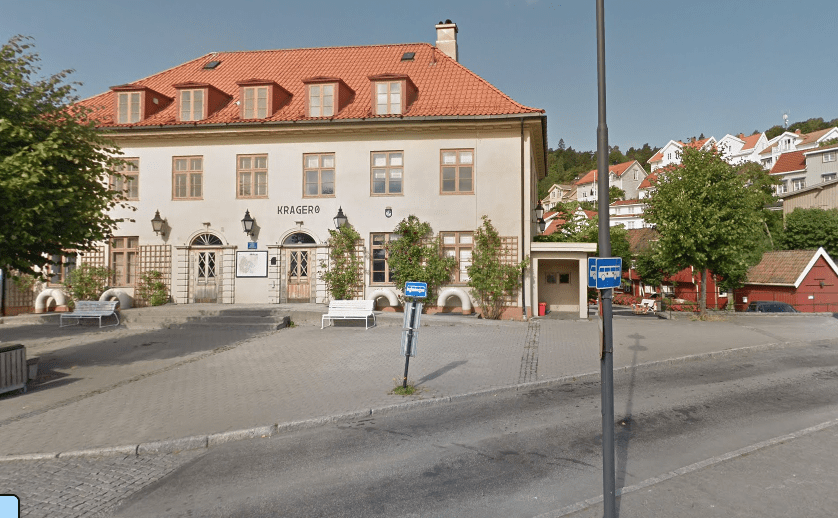
Currently, the old historic train station which housed the tourist office sits empty with no occupant. At a prominent point of entry in the town with views and a beautiful building, Elin and I wondered about the future uses. A cafe or restaurant would be nice, we decided, but the small town has several already. A revamped tourist office might be just the ticket.
On several occasions, the city has had great cultural projects in development for several years but by the time the project nears, either a change in political direction or budget results in the project funding being unavailable. Lenders who want to see their return on investment end up developing their own projects with less benefit for the public.
Questions for future investigation:
What are the incentives for residents to apply for self-imposed Protection Class 2? What are the incentives for owners to maintain protected properties? During my visit, the common response was that it was “the right thing to do” and upkeep of historic properties benefited the economy of the town, but it would be interesting to explore this further.
Where are the boundaries and why? Why not further up the hill to the old school house? How much of Thomesheia and Vestheia are included?
How will the city deal with rising sea levels?
What is the public perception of the town historic areas? What does the public imagine the town will look like in the future?
 Nordic Vernacular Preservation: A Travel Blog
You must be logged in to post a comment.